
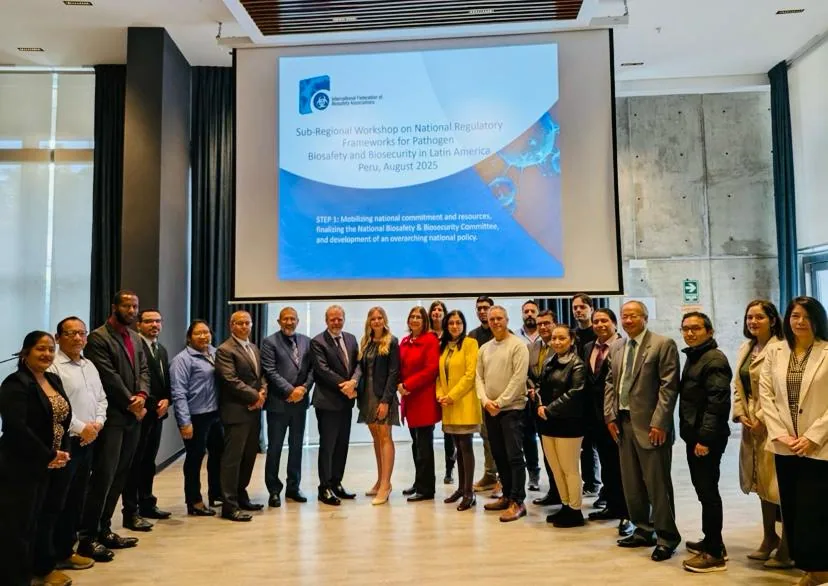
The workshop brought together representatives from ministries, public agencies, academia and the scientific community from six countries in the region: Argentina, Brazil, Chile, Ecuador and Peru.
Between August 20 and 22, 2025, the Subregional Workshop of the International Federation of Biosafety Associations (IFBA) was held in Lima, Peru, for the development of national regulatory frameworks for biosafety and biosecurity of pathogens in different Latin American countries.
The event brought together representatives from ministries, public agencies, academia, and the scientific community from six countries in the region: Argentina, Brazil, Chile, Ecuador, and Peru.
As part of the Chilean delegation, authorities from the Ministry of Health and Dr. Nicole Tischler, virologist, academic at the School of Biochemistry at the Universidad San Sebastián, and director of the Molecular Virology Laboratory at the Centro Ciencia & Vida (FCV-USS), participated. Her participation highlighted the contribution of national research to a key discussion on regulatory challenges, cooperation in biosafety and biosecurity, in a context where preparation for epidemics and pandemics requires multisectoral and collaborative approaches.
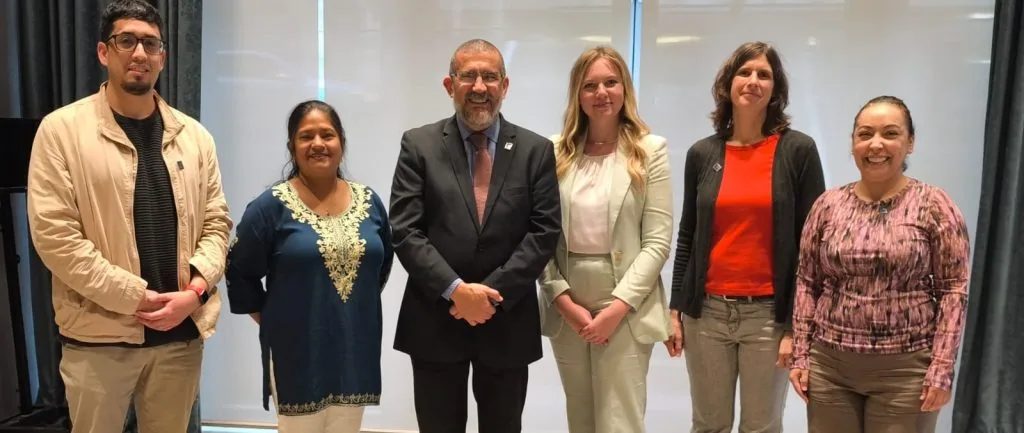
Furthermore, in December 2024, in Rio de Janeiro (Brazil), Dr. Tischler obtained the important professional certification in biological risk management from the IFBA according to the ISO-35001:2019 standard, an accreditation that reinforces her technical expertise in the area and positions her as a regional reference in the field. This specialized training complements her role in the workshop, providing a perspective based on internationally recognized standards for the strengthening of institutional capacities and safe and responsible practices in the face of biological threats.
Dr. Tischler commented that "the workshop offered a space for exchange with high-level regulators and experts from different countries and allowed for an analysis of how to continue strengthening biosafety and biosecurity in the region. This space for analysis and dialogue is fundamental because it allows countries with similar challenges and a common geographical context to support each other in the search for strategies and establish collaborative ties."
In the words of the Peruvian authorities, the initiative sought to "strengthen biosafety and biosecurity in our region to prevent biological risks, whether natural, accidental, or deliberate." Organized with the support of the Government of Canada, the meeting highlighted the need to continue advancing toward robust national biosafety and biosecurity strategies, harmonized with the guidelines of the World Health Organization and the recommendations of the Global Health Security Agenda.
The agenda included diagnostics of the situation in each country, identification of gaps, risk analysis, and the definition of priority actions to strengthen regulatory frameworks and institutional capacities.