

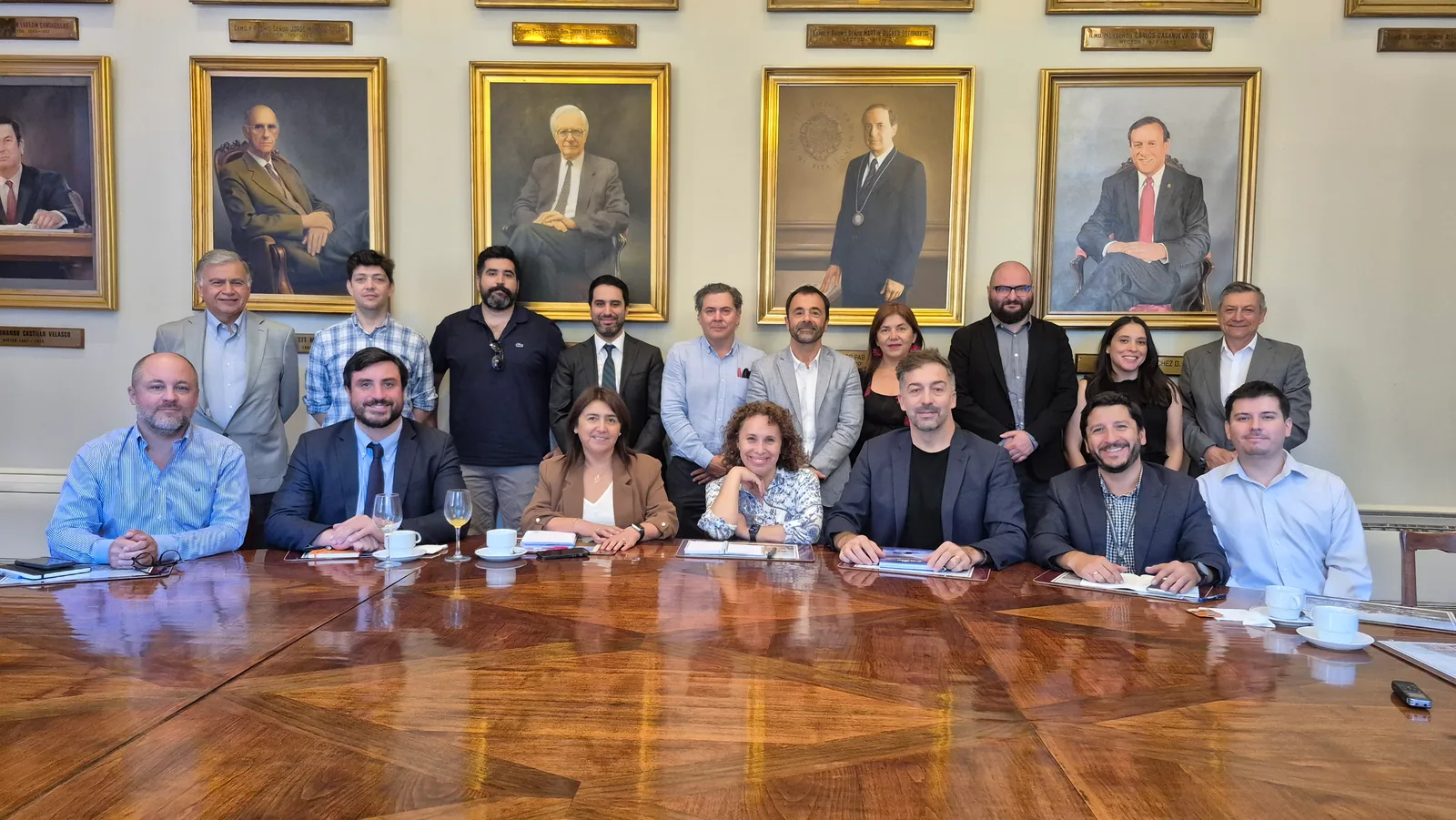
The activity took place within the framework of the Advanced Therapies Thematic Group, which gathered information through a structured survey conducted between February and March 2026 among 20 representatives from the academic, clinical, business, and regulatory sectors.
Participants included Dr. Alvaro Lladser, along with members from universities, research centers, biotechnology companies, health services, and public agencies linked to health innovation.
The objective was to build a shared vision of the existing capacities in the country, the sector's main gaps, and the priority initiatives to strengthen this area over the coming years.
The director of the Centro Basal Ciencia & Vida, of Fundacion Ciencia & Vida - Universidad San Sebastian, Dr. Alvaro Lladser, who is also a professor at the USS Faculty of Medicine, participated in a strategic diagnostic session aimed at analyzing the current state and projections of the advanced therapies ecosystem in Chile, a key area for biomedical innovation and the medicine of the future.
One of the main results of the diagnostic is the consensus that Chile possesses relevant scientific capacities in advanced therapies, but still faces significant obstacles to consolidating a robust ecosystem. The report warns that the main gaps are not only scientific but also structural, especially regarding enabling infrastructure, funding for applied innovation, regulatory clarity, and institutional coordination.
In this regard, the document identifies priority challenges such as the development of manufacturing platforms under GMP/GTP standards, international-standard preclinical infrastructure, specialized biobanks, and interoperable clinical data systems. These capacities are seen as essential conditions for moving from research toward clinical validation, technological scaling, and the effective transfer of cell and gene therapies.
Another of the most relevant findings of the diagnostic is the broad support for the creation of a National Piloting Network for Advanced Therapies, conceived as an organizational infrastructure capable of connecting science, technology, and clinical practice. This network would allow for the validation of biomedical solutions in real clinical settings, reduce technological and regulatory validation times, facilitate early clinical evidence, and coordinate capacities currently dispersed among hospitals, R&D centers, and companies.
The participation of Dr. Alvaro Lladser in this instance reflects the commitment of the Centro Basal Ciencia & Vida (FCV-USS) to strategic coordination processes that seek to strengthen biomedical research, health innovation, and the building of national capacities in frontier areas.
In a scenario where advanced therapies open new possibilities for addressing complex diseases, these types of spaces are key to projecting a scientific and technological development agenda with an impact for Chile.