


The US Food and Drug Administration (FDA) has just approved a new treatment for synovial sarcoma based on the administration of genetically modified immune cells, called T cells.
In our country, Dr. Álvaro Lladser leads a research laboratory that works precisely on understanding how these T cells can eliminate solid tumors in order to develop cellular immunotherapies that work in these types of cancers, which represent approximately 90% of cases.
Immunotherapy has emerged in the last decade as a new way to treat cancer, which does not seek to directly kill cancer cells with toxic molecules like chemotherapy, but rather seeks to enhance our immune system's ability to destroy them. Immunotherapy has proven effective even in patients with advanced stages of the disease, where traditional therapies such as surgery and chemotherapy have failed. Furthermore, immunotherapy can trigger a memory immune response, which can protect patients in the long term. This translates into more potent and durable therapeutic responses with fewer adverse side effects, prolonging patients' lives and improving their quality of life.
Currently, there are two types of immunotherapies that work in patients. The most common are monoclonal antibodies, which reactivate the T cells that are attacking the tumor. They boost them, giving them a shield to defend themselves and exert their action more powerfully. The other type is cellular immunotherapy, which consists of extracting T cells from patients, multiplying them in the laboratory, and genetically modifying them with natural receptors (TCR, for T cell receptor) or chimeric receptors (CAR, for chimeric antigen receptor) that allow them to recognize cancer cells with great efficacy. Cellular immunotherapy with chimeric receptors or CAR-T represents one of the most significant advances in recent years, with several approved by the FDA.
“This type of cellular immunotherapy works successfully against hematological cancers, such as lymphoma or leukemia, where cancer cells are in circulation and are easier to recognize. However, this type of cellular immunotherapy does not work well in solid tumors, which represent approximately 90% of cancer cases in the population, which is why our research focuses on understanding the mechanisms that allow T cells to eliminate solid tumors,” recognizes Dr. Álvaro Lladser, director of the Immunoncology Laboratory of the Fundacion Ciencia & Vida of the Universidad San Sebastian.
“One line of research in our laboratory focuses on developing a cellular immunotherapy that uses T cells extracted from the patient's own blood, which are isolated, revitalized, and multiplied in the laboratory before being reintroduced,” highlights the biochemist, PhD in Biomedical Sciences from the Universidad de Chile, and postdoctoral fellow from the Karolinska Institute, Sweden.
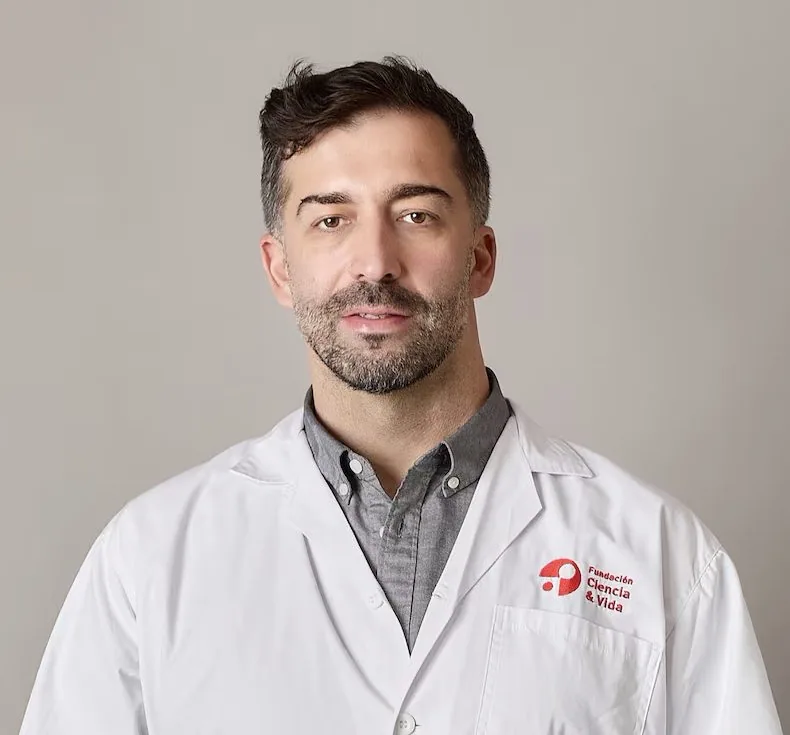
This is how, together with his team of nearly fifteen researchers and collaborators from the Institut Curie of Paris , University College London, and the University of Oxford in England, they work hard to redirect T cells to infiltrate and eliminate solid tumors more effectively. Together with his co-investigator, Dr. Vincenzo Borgna, a urologist at the Barros Luco Hospital and professor at the Universidad San Sebastian, they developed at a preclinical level for the first time in Chile a CAR-T type cellular immunotherapy for gallbladder cancer, which could easily be adapted for other types of cancer.
Despite the challenges of its implementation in solid tumors, “This year there have been significant advances,” notes Borgna, referring to a recent study in patients with neuroblastoma, a type of brain tumor, which showed positive responses to CAR-T therapy. “The immunotherapy was administered directly to the brain, and within a week they already showed a positive response to a tumor that is among the most aggressive in existence and had not responded to various chemotherapies.”
In addition, we must add the new TCR-T immunotherapy approved by the FDA for synovial sarcomas, which are highly aggressive solid tumors. This was based on a study conducted in Europe, the United States, and Canada for patients with sarcomas and liposarcomas, also resistant to chemotherapy, which showed a response of up to 40% in sarcomas. “This was always a therapy for hematological cancer, but in solid cancers it had not had much response. This is the first evidence that they can reach solid tumors,” says the laboratory's co-investigator.
Challenges and Future Perspectives
“There are patients who respond very well to cellular immunotherapy, but still a significant proportion of patients do not respond or develop resistance over time,” explains Dr. Diego Figueroa, who completed his doctoral thesis in Biotechnology under the supervision of Dr. Lladser and is now developing a postdoctoral project focused on this topic. “Cancer is an adaptive disease. Malignant cells are constantly accumulating mutations and acquiring resistance mechanisms to therapies, evading the immune response,” explains Figueroa.
“We are currently studying the mechanisms underlying an effective response of cellular immunotherapy for solid tumors. We have realized that it is necessary for the administered T cells to communicate with the immune cells in our body so that, together, they robustly attack cancer cells,” details the PhD in Biotechnology.
On the other hand, this type of cellular immunotherapy has a very high cost (over 200 million pesos), so it is important not to raise false expectations, as there is still a long way to go to reduce production costs. However, they represent a crucial step toward more personalized and effective cancer treatments.