
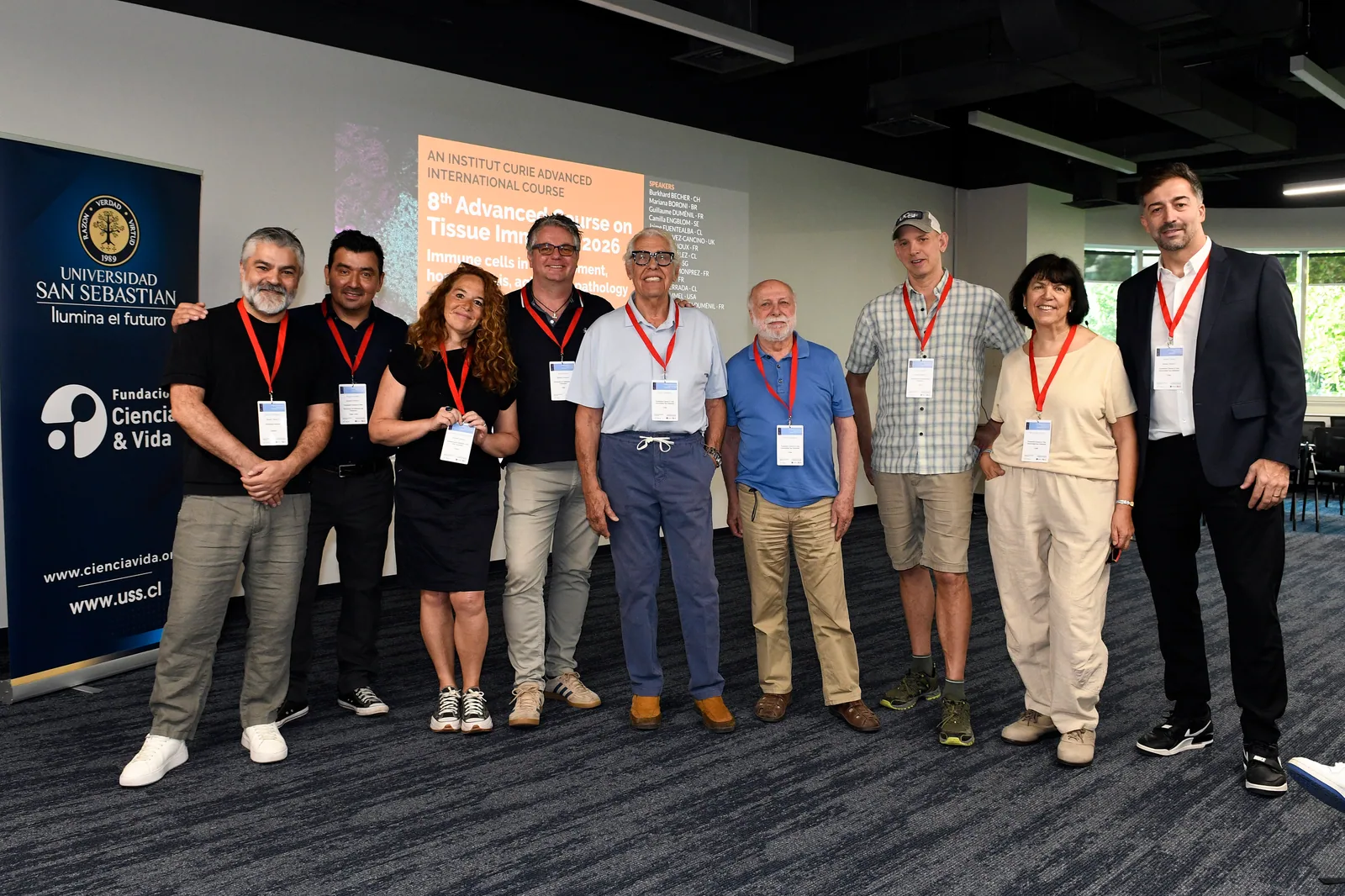
The advanced course on tissue immunity took place in enero de 2026 at the Campus Ciudad Universitaria of the USS and brought together participants from Latin America along with prominent leading researchers in various fields of immunology. The Centro Basal Ciencia & Vida, of the Fundación Ciencia & Vida - Universidad San Sebastián (USS), held between 20 y el 23 de enero de 2026 the 8th Advanced Course on Tissue Immunity - Immune cells in development, homeostasis, aging and pathology,...
The advanced course on tissue immunity took place in enero de 2026 at the Campus Ciudad Universitaria of the USS and brought together participants from Latin America along with prominent leading researchers in various fields of immunology.
The Centro Basal Ciencia & Vida, of the Fundación Ciencia & Vida - Universidad San Sebastián (USS), held the 8th Advanced Course on Tissue Immunity - Immune cells in development, homeostasis, aging and pathology between 20 y el 23 de enero de 2026, an initiative organized in conjunction with the Institut Curie of France. The activity took place at the Campus Ciudad Universitaria and was aimed at master's, doctoral, and postdoctoral students from Chile, Latin America, and other countries.
The realization of this eighth version continues a strategic alliance between the Fundación Ciencia & Vida - USS and the Institut Curie, focused on doctoral and postdoctoral training, academic mobility, and the development of joint research in cancer, immunology, and cell biology, strengthening the international projection of the center and the host institutions USS in the field of biomedical science.
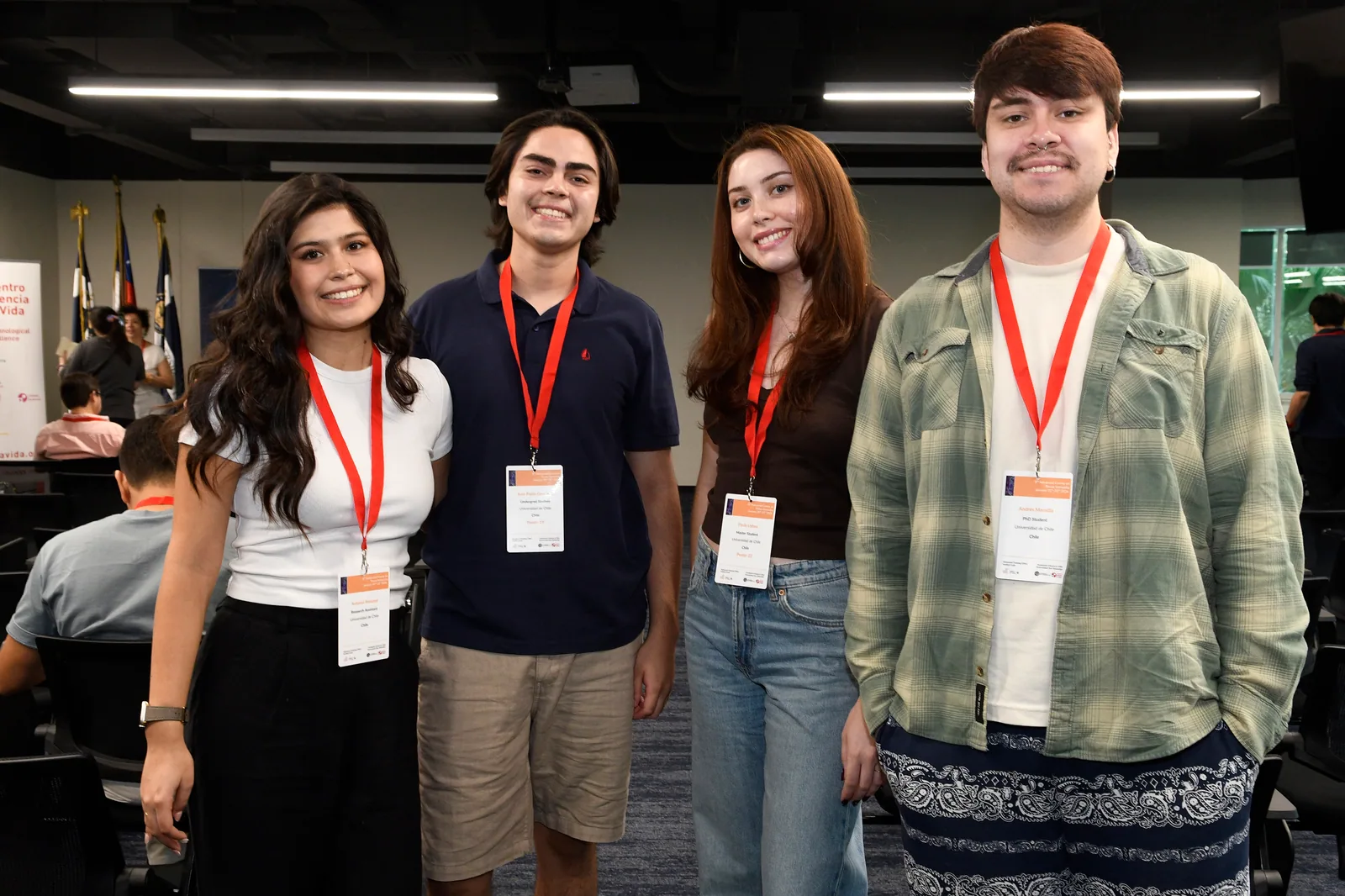
The program included four intensive days of advanced training, focused on the study of tissue-resident immune cells, their role in development, homeostasis, and aging, as well as their dysregulation in pathologies such as cancer. Through keynote lectures, discussion sessions, thematic workshops, poster sessions, and networking activities, the course contributed to strengthening the scientific training of young researchers and international academic exchange in key areas of contemporary immunology.
In this regard, the Director of the Centro Ciencia & Vida, which is part of the network of centers of the Agencia Nacional de Investigación y Desarrollo (ANID), states that:
This course was a unique opportunity for the professional development of researchers and students from Latin America, allowing them to hold high-level discussions and generate scientific networks around tissue immunity alongside world-leading researchers. These initiatives are part of a collaboration of more than ten years between the Fundación Ciencia & Vida–USS and the Institut Curie, which has promoted scientific exchange and the mobility of national researchers, steadily strengthening science in Chile, particularly in the area of immunology.
For his part, Dr. Tomás Pérez-Acle, Vice-Rector for Research and Doctorates at the Universidad San Sebastián, in whose facilities the meeting was held, highlights that “this is a course supported by the basal project of the Fundación Ciencia & Vida belonging to our university and of which we are part, not only when our academics participate as speakers and our doctoral students as pupils, but also from the point of view of financing and organization. And we hope it is a course that continues over time, as it is the driving force for new innovation ideas, not only for students but also for our researchers and for training the scientists of the future.”
The eighth version of the course featured the participation of leading researchers in immunology, cell biology, and cancer immunotherapy from institutions of excellence in Europe, North America, Asia, and Oceania, such as the Institut Curie, Institut Pasteur, Karolinska Institutet, University of California San Francisco (UCSF), University College London (UCL), University of Oxford, L, Gustave Roussy, Singapore Immunology Network (SIgN), University of Melbourne, the University of São Paulo, and the Brazilian National Cancer Institute.
Among the speakers, notable figures included Matthew Krummel (University of California, San Francisco), recognized for his foundational contributions to the development of immune checkpoint blockade therapies; Ana-Maria Lennon-Duménil (Institut Curie, INSERM U932 – PSL University), director of the Department of Immunity and Cancer at the Institut Curie; Sergio Quezada (University College London), an international reference in tumor immunomodulation; Laura Mackay (University of Melbourne), noted for her contributions to the study of tissue immunity and immunological memory; and Ignacio Melero (Universidad de Navarra and University of Oxford), one of the leading European references and pioneers in translational cancer immunotherapy. The presentations addressed topics such as inflammation, tissue-pathogen interactions, aging, tumor evasion mechanisms, and current challenges in the development of new oncological immunotherapy strategies.
Dr. Mackay referred to the relevance of conducting this type of advanced training in the country, noting that “this is a very opportune moment to deliver this course in Chile. There are many excellent speakers with very different perspectives on tissue immunity (...) In addition to our usual way of thinking about how, for example, immune cells protect against diseases, there are many other functions related to the functioning of collective cells in tissues. And I think it is really exciting to see how this develops.”
For her part, Dr. Lennon-Duménil, a Chilean with her own laboratory for over 20 years at the Institut Curie, explains that the collaborative link with the Fundación Ciencia & Vida - Universidad San Sebastián is long-standing and arose with the purpose of “bringing scientists from all parts of the world: Europe, the United States, Asia, to share science with students, PhD candidates, and South American researchers. And the goal is for us to have a good time, talk a lot about science, and establish many new collaborations.”
This last point is also highlighted by Dr. Carolina Prado, associate researcher at the Centro Basal and academic at the Faculty of Medicine of the Universidad San Sebastián, who is also part of the Society for Mucosal Immunology, noting that “this course provides students with the possibility of talking one-on-one with researchers coming from other parts of the world, generating collaboration opportunities.”
Advanced training and international scientific cooperation
In addition to the lecture series, participants presented their research projects in poster sessions, interacted directly with speakers through scientific speed dating sessions, and participated in workshops oriented toward academic career development, project design, accessibility in science, and the relevance of considering sex and age variables in the study of tissue immunity.
The course was funded by the Advanced Training Office and the Medico-Scientific Program in Immunotherapy of the Institut Curie, the Centro Ciencia & Vida (FB210008), FONDECYT 1251312, FOVI240247, and the Society for Mucosal Immunology. Likewise, the cell therapy session was organized and co-funded by the RHU EpCART project, with support from the French National Research Agency (ANR), within the framework of the France 2030 program.
Through this initiative, the Centro Basal Ciencia & Vida, of the Fundación Ciencia & Vida - Universidad San Sebastián, consolidates its international projection in biomedical science and its connection with world-class reference centers, contributing to the training of advanced human capital and the strengthening of scientific research in Chile and the region.