
The initiative, driven by Grupo Zenit, Centro Ciencia & Vida, and CeBiB, seeks to increase women's participation in science and technology-based ventures in the face of gaps in financing and leadership.
Supported by CORFO, the alliance connects ecosystem actors to transform research into solutions with economic and social impact, articulating networks, tools, and practices for projects or emerging companies.
According to recent studies on management positions in the sector, female executives represent only 17% compared to 83% for men. Meanwhile, with 7% of new degrees, Chilean women hold the poorest record among OECD countries.
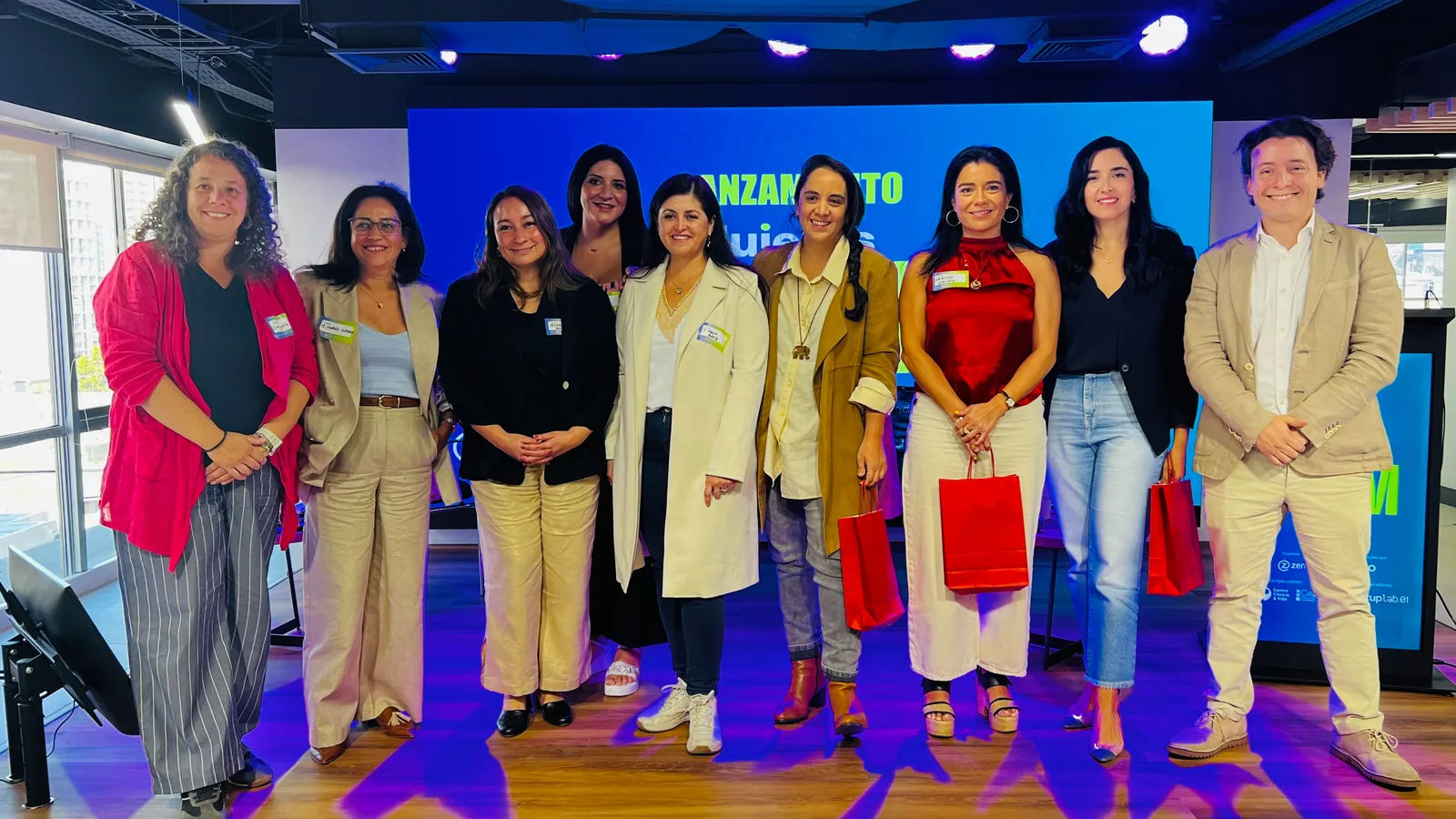
Three institutions—Grupo Zenit, Centro Ciencia & Vida (FCV-USS), and the Center for Biotechnology and Bioengineering (CeBiB)—launched a collaboration aimed at strengthening female leadership in science, technology, and entrepreneurship, focusing on the development of science and technology-based initiatives. The proposal seeks to address persistent gaps in participation and access to opportunities within the innovation ecosystem in Chile.
The STEM Women program (the acronym for the disciplines of women in science, technology, engineering, and mathematics) is aimed at women with training or experience in scientific and technological areas, as well as professionals developing projects linked to these disciplines. Through training sessions, mentoring, and networks, the initiative aims to provide tools to consolidate careers and leadership.
Its implementation materialized thanks to a collaboration between actors from the scientific and entrepreneurial worlds, with the goal of connecting capabilities that have historically operated separately. In this case, project acceleration is directly linked to research centers, seeking to facilitate the transfer of knowledge toward concrete applications.
“We are aware of many of the deficiencies that exist in entrepreneurship led by women,” says Daniela Elgueta, Innovation and Entrepreneurship Manager at Grupo Zenit. “In research, they have fewer publications and awarded projects, and every year the indicators show that women are below. We aim to impact those numbers and increase the number of female leaders in science and technology-based ventures.”
Constanza Sigala, Business Area Director of Centro Ciencia & Vida (of Fundacion Ciencia & Vida and Universidad San Sebastian), noted that “more and more women are entering careers previously associated with men, but difficulties in advancing and differences in areas such as access to financing still exist. We want to show that opportunities exist, that tools are available, and that it is possible to develop within this ecosystem.”
STEM Strategic Alliance
Women's participation in science, technology, engineering, and mathematics has increased in Chile in recent years, but it remains a minority in areas such as training, research, and entrepreneurship. In this scenario, the program arises to strengthen female leadership in innovation and technological development, its creators state. Its origin is related to the interest in establishing alliances, integrating scientific capabilities, and motivating ventures created by female entrepreneurs with training or experience in STEM areas.
The initiative also responds to a historical gap between research and technology transfer. In Chile, a significant portion of the knowledge generated in universities and scientific centers fails to become solutions or ventures, limiting its economic and social impact. Therefore, the collaboration aspires to shorten this second structural weakness through practical training, mentoring, and networks.
“Our purpose is to provide practical tools and knowledge so that early-stage projects can transform into ventures. We are interested in creating a community because individual work progresses more slowly, while in a community, processes accelerate and strengthen,” says Daniela Elgueta. This support is expected to be a pillar for ideas to evolve into business models or applied solutions.
Its implementation includes a training path structured into five bootcamps, held between March and July, with sessions addressing different stages of scientific entrepreneurship. The content ranges from identifying opportunities and developing purpose to validating business models, scaling strategies, and positioning, incorporating skills in negotiation, pitch, intellectual property, and financial decisions.
In parallel, the initiative has a team of speakers from the scientific, business, and innovation ecosystem, who participate in the different stages of the program providing specialized mentoring. This component seeks to link participants with active leaders in their fields, facilitating access to practical experiences, contact networks, and knowledge applied to the development of technological projects.
Underrepresentation in Various Stages
The creation of the program is framed in a context where gender gaps in science and technology persist throughout different stages of professional development, the network emphasizes.
Although women represent 53% of total enrollment in higher education, only about 21% study STEM careers (2025 Higher Education Gender Gap Report, prepared by the Higher Education Information Service). In the first year, the proportion drops to about 19–20%, while in the 2025 admission process, only 32% of the people selected in these areas were women, according to the same department.
Underrepresentation persists in later stages. In research, female participation fluctuates between 33% and 40%, and in the labor market, less than 30% of STEM jobs are held by women (Third Gender Radiography conducted by the Ministry of Science, Technology, Knowledge, and Innovation). The deficiency deepens in leadership: only 17% of technological executive positions are held by women, and about 5% of technological startups have been founded by them (according to the consultancy IT Hunter).
The organizations leading the alliance state that incorporating more women into these spaces also has effects on the performance of the innovation system. Various backgrounds indicate that diverse teams achieve better results in terms of innovation and knowledge generation. In this scenario, the program aims to promote leadership development and strengthen female participation in strategic sectors.
“It is a concrete opportunity to foster entrepreneurship in women, in a more focused and applied way. Today there is an ecosystem where we can collaborate with each other, support one another, and move forward based on the experiences of others who have already been successful,” indicated Constanza Sigala.
Text by Luis Francisco Sandoval, S&M Comunicaciones Agency.