
Chilean researchers and health teams contributed diagnostic protocols, clinical knowledge, materials to detect the virus and experience built up over decades.
The response made it possible to support laboratories and health teams on several continents and, according to three papers in international journals, became an example of regional scientific cooperation in the face of an international emergency.
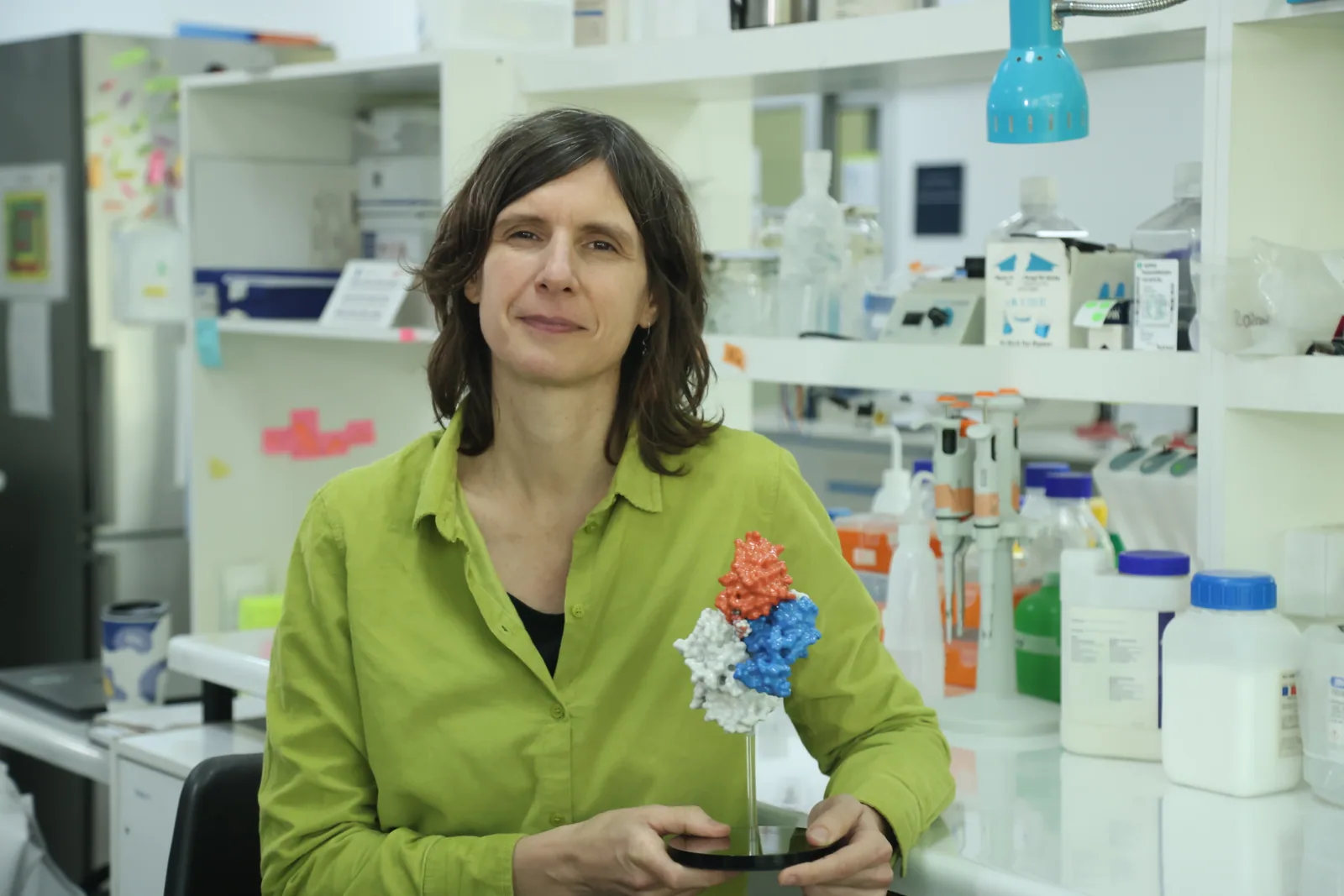
"Chile and Argentina put their experience with hantavirus at the service of the world during the outbreak,” said Dr. Nicole Tischler, principal investigator at Centro Ciencia & Vida and academic at Universidad San Sebastián.
The Andes hantavirus outbreak recorded this year aboard the MV Hondius cruise ship did not only test the health systems of the countries that received passengers and patients. It also showed the value of the scientific knowledge built up in countries such as Chile, where the virus has been part of the epidemiological landscape for decades.
This analysis is among the conclusions of a report in The Lancet signed by scientists from Argentina, Chile, the United States and Uruguay, among them Dr. Nicole Tischler, researcher at the Molecular Virology Laboratory of Centro Ciencia & Vida, of Fundación Ciencia & Vida and Universidad San Sebastián, and president of the International Society for Hantaviruses. A second study published in The Lancet together with WHO officials, entitled “Andes hantavirus: operationalising science in real time”, also highlights the response made possible by the scientific capacity built in South America and the importance of collaboration between countries.
From the confirmation of the first cases, scientists and authorities in Argentina and Chile shared information in real time with the WHO and with international clinical and public health experts. They also made available to other health systems tools that did not exist in the countries receiving infected or suspected patients.
Specifically, Argentina and Chile sent Andes virus RNA, ELISA test plates, diagnostic protocols, monoclonal antibodies and clinical guidelines to laboratories in Spain, Senegal, South Africa, the Netherlands and the United Kingdom. The South American experts also provided epidemiological guidance, drawing on decades of experience with a pathogen little known outside the region.
According to the authors, this collaboration allowed Argentina to send more than 2,500 international diagnostic tests, and it later extended to eight other countries. From Chile, the USS academic adds, specific monoclonal antibodies for detection were sent, with contributions from universities, research centres and health services.
“We contributed concrete advice on several fronts: protocols and guidelines for clinical treatment, studies on person-to-person transmission, contact tracing, isolation measures, discharge criteria, detection of the virus in fluids, molecular diagnosis, viral epidemiology and investigation of the origin of the outbreak", explains Tischler, who attributes this capacity to years of research in an endemic country, with steady funding from the Ministries of Science and Health.
"Diagnosis was delayed, but once the virus was identified the scientific response was fast because we were prepared: in an endemic country like Chile there was already research and clinical protocols for this kind of pathogen", added the director of the Virology Laboratory at Centro Ciencia & Vida (FCV-USS).
The contributing institutions include Fundación Ciencia & Vida - Centro Ciencia & Vida, the Instituto de Salud Pública, the Pontificia Universidad Católica de Chile and the Pontificia Universidad Católica de Valparaíso, Red Salud UC Christus, SENTINET, the Los Ríos Regional Health Office (Seremi de Salud), the Institute of Science and Innovation in Medicine of Universidad del Desarrollo, and the Faculties of Science and of Medicine of Universidad San Sebastián.
An outbreak that took almost a month to identify
The episode is also reconstructed in a third paper published in The Lancet Regional Health – Europe, signed by more than twenty international specialists, which supports the authors’ involvement in investigating the origin of the case and in the international coordination after the first infections.
The outbreak began in April, when the cruise ship sailed from Ushuaia, Argentina, with passengers from 23 countries. Molecular diagnosis took about a month and was confirmed by tests carried out in South Africa. According to the analysis, the delay reflects a difficulty that may recur with rare diseases: hospitals investigate a severe respiratory illness within their usual protocols, but seldom look for specific pathogens without a prior epidemiological suspicion.
The WHO’s hypothesis is that the first case acquired the infection on land before boarding and that passengers then infected one another, which is relevant because the Andes virus is the only hantavirus with known person-to-person transmission. The final count was 13 confirmed and suspected cases.
After passengers were told to isolate in their cabins, the ship tried to stop in Cape Verde and finally disembarked the passengers in Tenerife, Spain, in early May, to send them back to their home countries. Medical staff from Spain, France, the Netherlands, Switzerland, the United Kingdom and the United States applied the care protocols and guidelines in record time and prevented deaths and further infections. The WHO declared the outbreak over in July, 42 days after the last positive diagnosis.
A scientific network ready before the emergency
Chile’s involvement did not end with the management of the outbreak. The WHO response was activated through the Collaborative Open Research Consortia for priority pathogens (CORC), a mechanism already being prepared before the emergency to maintain permanent scientific networks around virus families with pandemic potential.
A few days after the health emergency was declared, a scientific consultation organised for the WHO by the UK agency UKHSA, in collaboration with the International Society for Hantaviruses led by Dr. Tischler, brought together more than 1,600 specialists from over 130 countries to set research priorities.
That process gave rise to the NAVIS protocol, focused on studying the ship’s passengers with regard to virology, immunology and the clinical mechanisms of this well-defined cohort, which can serve as a framework for future outbreaks and contribute to better pandemic preparedness. Researchers from 21 countries joined within days, turning the outbreak into a concrete test of a collaboration system the WHO had been developing.
For Tischler, the episode showed that knowledge generated in endemic countries can become an international resource in an emergency affecting a population with no previous experience of the virus.
The pending challenge: vaccine development
Despite decades of research, there are no vaccines or antivirals approved for clinical use against the Andes variant. Human monoclonal antibodies and vaccine candidates are under investigation, but none has reached use in patients. The authors attribute this lag to the lack of incentive for the private sector, intermittent funding for rare but lethal pathogens, and the fact that their development requires maximum-containment laboratories, available in only a small number of countries.
"There is still no international call to develop a vaccine against the Andes virus, but we hope the concern raised by the outbreak will drive its funding in the short term", says Tischler, who leads one of the most promising ANID projects in the search for immunisation against Andes hantavirus: a platform based on empty, non-infectious viral particles to generate an immune response.
The WHO lists hantaviruses among the priority pathogens of its R&D Blueprint, a framework that, through the CORC activities, seeks to chart a roadmap for clinical tools against diseases with epidemic potential but little prior development.
An “infodemic” at the speed of the virus
Almost as soon as the outbreak became public, unverified accounts circulated about the origin of the virus, the routes of infection and the reasons behind the health measures. The authors of the paper in The Lancet Regional Health describe this as part of an "infodemic" that spreads faster than any pathogen, and distinguish between disinformation (fabricated messages), misinformation without intent to harm, and malinformation, which uses real data to cause harm. All three forms, they note, outpaced the ability of health agencies and scientists to respond.
"Those of us directly involved in the response saw a very different process from the one described in some publications written from outside, without knowledge of the coordinated work the WHO did on the ground", says the USS academic, adding that the International Society for Hantaviruses issued a statement on the matter to counter the misinformation.
"With this example we want to highlight the importance of studying pathogens that are endemic in our country, and the great value of the mechanisms that currently exist in Chile to study them through funding from the Ministry of Science. That knowledge has not only helped Chile be better prepared for future outbreaks, it is also available to the world, and that makes us proud", concludes Dr. Tischler, who will chair the next congress of the International Society for Hantaviruses in November.
The meeting, in Puerto Varas, will bring together experts from around the world to present and discuss advances in viral epidemiology, ecology, virus–host interaction, pathogenesis, clinical aspects and the development of vaccines and treatments ( https://www.hantavirussociety.org/ich2026/ ). Before the congress, Tischler will present the work done in Chile in this field at a public CORC event scheduled for September 10.
Text by Luis Francisco Sandoval, S&M Comunicaciones agency.