

The discovery, made in collaboration with the University of California San Francisco (UCSF), opens the possibility of detecting the risk of the disease long before a tumour forms, allowing timely intervention.
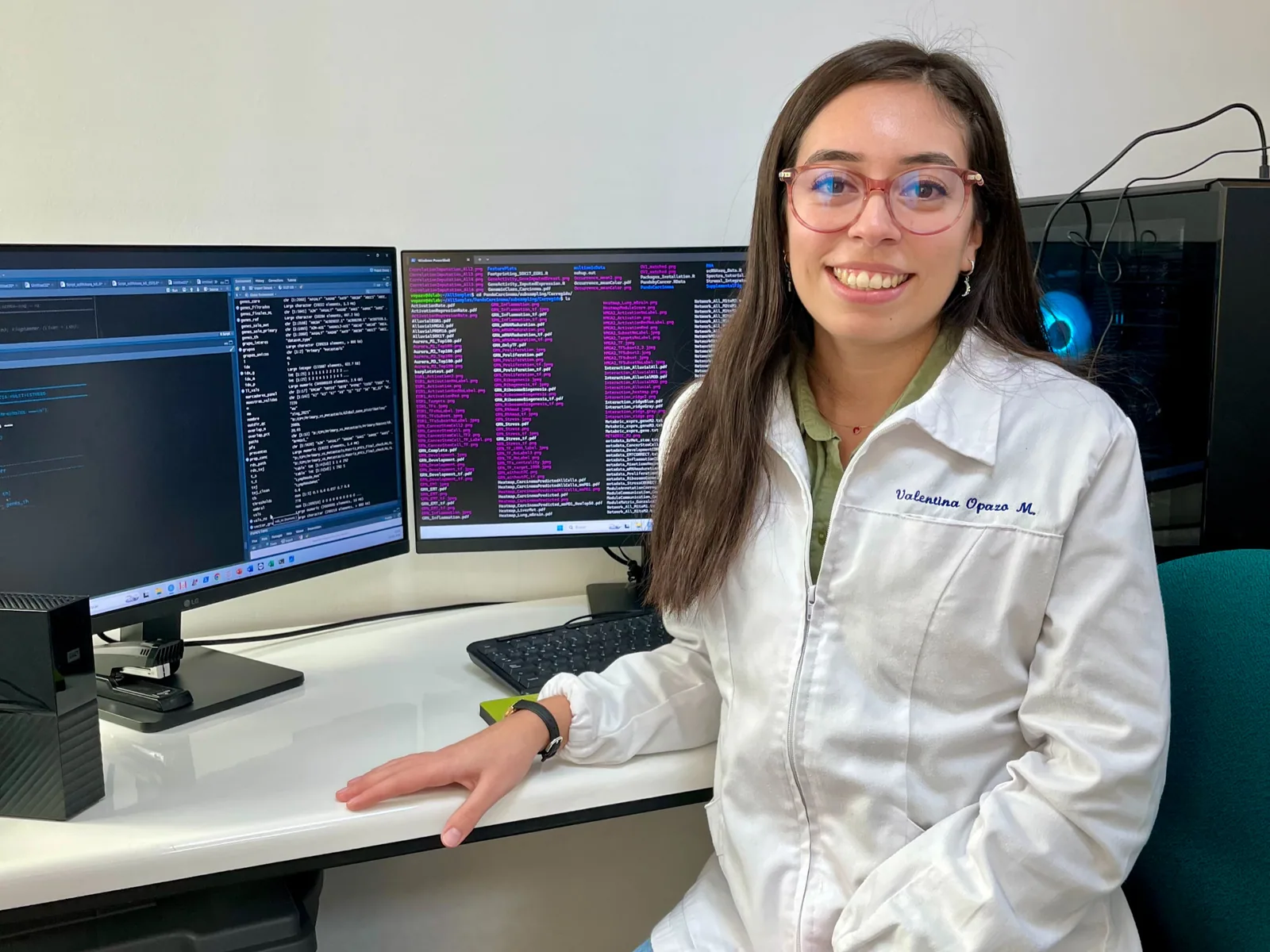
Valentina Opazo-Mellado, research assistant at Centro Ciencia & Vida, carried out the genetic study on samples from 700 patients, which made it possible to identify the unique fingerprint left by dense breast tissue and linked to the development of the disease.
The discovery, made in collaboration with the University of California San Francisco (UCSF), opens the possibility of detecting the risk of the disease long before a tumour forms, allowing timely intervention.
Dr. Hugo González, of the Center, who led the analyses, highlighted that the study proposes for the first time a mechanism linking tissue fibrosis to DNA damage, a question that had remained unanswered for years.
An international team led by researchers at the University of California San Francisco (UCSF), with bioinformatic contributions from Centro Ciencia & Vida, of Fundación Ciencia & Vida and Universidad San Sebastián (FCV-USS), found that the stiffness of breast tissue alters immune cells and turns them into agents that damage the healthy cells around them, producing alterations with an easily recognisable signature.
The study was published in Cancer Cell, the highest-impact journal in basic cancer research.
The Chilean team’s contribution was the study and cross-analysis of data from about 700 breast cancer patients, together with the analysis of samples generated in experimental models at UCSF. This work was carried out by Valentina Opazo-Mellado, who holds a master’s in Biochemistry and Bioinformatics from Universidad de Concepción and has spent three years as a research assistant at the Tumour Microenvironment and Metastasis Laboratory.
The finding answers a question that cancer research had for decades been unable to resolve with mechanistic precision: why women with dense breast tissue, detectable on a routine mammogram, are at greater risk of developing cancer. Until now, the association was statistical. This study proposes, for the first time, a cellular and molecular explanation.
The study was highlighted in an editorial in Cancer Cell itself (signed by specialists from the Mayo Clinic), which described it as an advance that closes a mechanistic gap cancer research had been unable to bridge: how the physical stiffness of tissue translates into permanent genetic damage. The editorial concludes that in some tissues the path to mutation may begin not with an external carcinogen but with a stiffened microenvironment that turns immune cells into endogenous mutagens.
A ‘fingerprint’ to get ahead of the tumour
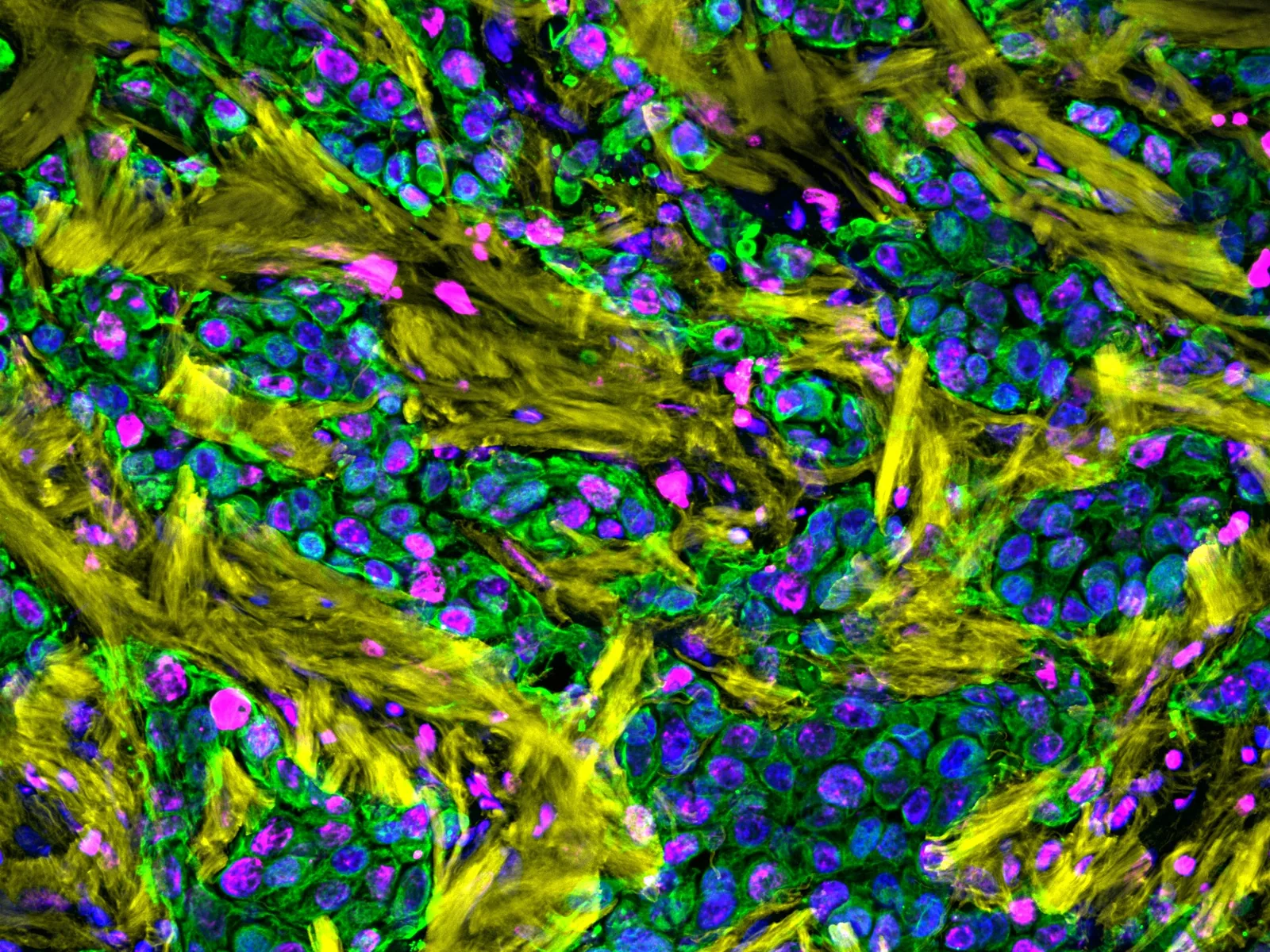
The computational analysis carried out in Chile showed that stiff breast tissue does not multiply mutations at random but concentrates them in specific places in the DNA, leaving a unique ‘fingerprint’. This genetic mark is the key: if doctors can identify that fingerprint in time, they will be able to tell whether a woman will develop the disease years before a tumour appears.
Opazo-Mellado explains that the central result was not what they expected when they began the analysis. "Stiff tissue does not generate more mutations; it changes where they are and what characteristics they have. There are not more of them: they are in specific, identifiable places, and that allowed us to understand exactly how dense tissue gradually turns into the disease.”
Using a database of 700 patients, rather than smaller cohorts, was decisive for the statistical validity of the finding. The more cases, the less likely it is that the observed mutational pattern is the result of chance, treatment bias or the specific characteristics of an age group. The population analysis made it possible to conclude that the mutational signature of dense breast tissue – tissue with more fibrous and glandular tissue than fat, which looks whiter and more opaque on a mammogram than normal tissue – is consistent and reproducible.
Dr. Hugo González, director of the Tumour Microenvironment and Metastasis Laboratory and associate researcher at Centro Ciencia & Vida, stresses that Opazo-Mellado’s participation in a study of this scope shows that the gap between science done in Chile and that produced at the world’s best-funded centres can be narrowed through bioinformatic specialisation. “Chile has the talent. What is missing are the opportunities to channel it, and international collaborations like this are exactly that: a way for Chilean researchers to take part in science at the highest level.”
Intervening before the tumour forms
The discovery works like a chain of events in which the physical stiffness of the dense breast stresses healthy cells. That stress then acts as a false alarm that attracts macrophages (cells that usually defend us). However, on arriving in such a stiff environment, the tissue ‘confuses’ them and turns them into enemies, forcing them to release compounds that attack and damage the DNA of neighbouring cells, starting the path towards cancer.
What sets this mechanism apart from classic carcinogens is its internal origin. Tobacco, radiation and chemical agents act from outside the body. This study proposes that the immune system itself, operating in fibrotic tissue, can cause the same kind of damage.
"Classically, DNA is understood to be damaged by things we eat or inhale: cigarettes, radiation, chemical agents. But we had not found evidence that the immune system itself can also damage DNA. Here we discover that it is our own defences that cause the damage, and they do so because they are confused by the pressure and stiffness of the surrounding tissue," explains Dr. González.
The most immediate clinical implication is that a dense mammogram is no longer just a statistical risk factor but a signal with a specific molecular correlate.
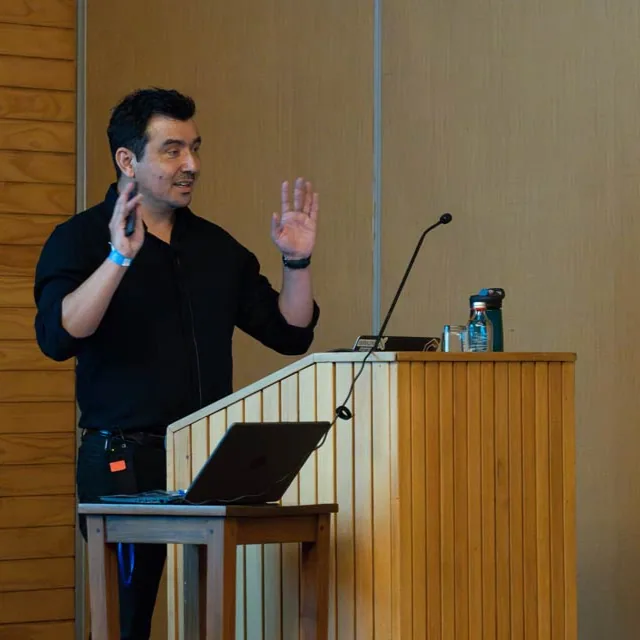
Dr. González notes that the next research step is to study whether the genetic damage described in this work already occurs in normal tissue from patients with dense mammograms, before any clinical sign of a tumour. "The result takes us to that window of time in patients when the tissue is not a tumour but can become one. The next step is to go even earlier and see whether patients with normal mammograms already show DNA damage, even though their cells are not tumour cells.”
The finding may also explain why certain cancer therapies are less effective than expected. By showing that an active cascade generates mutations at points beyond the targets of some treatments, the study suggests these therapies may not be interrupting the whole process. "The mechanism we identified suggests why certain therapies aimed at specific targets do not have the desired effect. It also tells us which would be a key point to block so that the disease stops progressing," explains Opazo-Mellado.
For Opazo-Mellado, the publication in Cancer Cell means more than the scientific result. Having contributed decisive analyses to a study of this impact, from Santiago and with limited resources, shows that bioinformatic specialisation is a viable path to taking part in top-level science. "This motivates you, because it shows that what we are doing here matters. It is a way of saying: you do not need to be at that level of resources to be on a par academically," Opazo-Mellado concludes. By Luis Francisco Sandoval, S&M Comunicaciones agency