
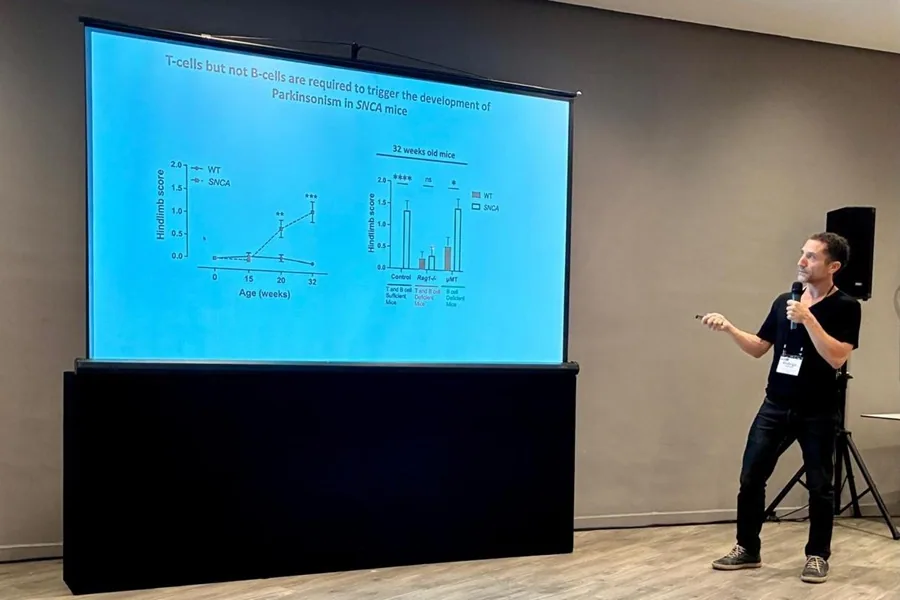
Dr. Rodrigo Pacheco, researcher at Centro Ciencia & Vida, of Fundación Ciencia & Vida and Universidad San Sebastián, took part in Dopamine 2026, one of the main scientific meetings on disorders of the dopaminergic system, held in Seville, Spain.
Dr. Rodrigo Pacheco, head of the Neuroimmunology Laboratory at the Ciencia & Vida Basal Center (FCV-USS), took part in the seventh edition of the international congress Dopamine 2026, where he presented progress in his research on the immunological mechanisms involved in Parkinson’s disease.
Organised by the Dopamine Society , for more than two decades the meeting has brought together researchers, clinicians and professionals from different disciplines to share scientific advances on the basic aspects of the dopaminergic system and on diseases linked to its alterations, including Parkinson’s, schizophrenia and addiction.
Research on microbiota and immunity
At the meeting, Dr. Pacheco gave the talk “Microbiota-dependent T-cell response to pathogenic alpha-synuclein plays a critical role triggering the development of sensory and motor impairment associated with Parkinson’s disease”, presenting progress in a line of research developed in the laboratory he leads.
The researcher explained how an autoreactive immune response against pathogenic structures of a neuronal protein called alpha-synuclein develops in a gut-microbiota-dependent manner and plays a key role in producing the sensory and motor impairments associated with Parkinson’s disease, providing new evidence on the relationship between the immune system and neurodegenerative processes.
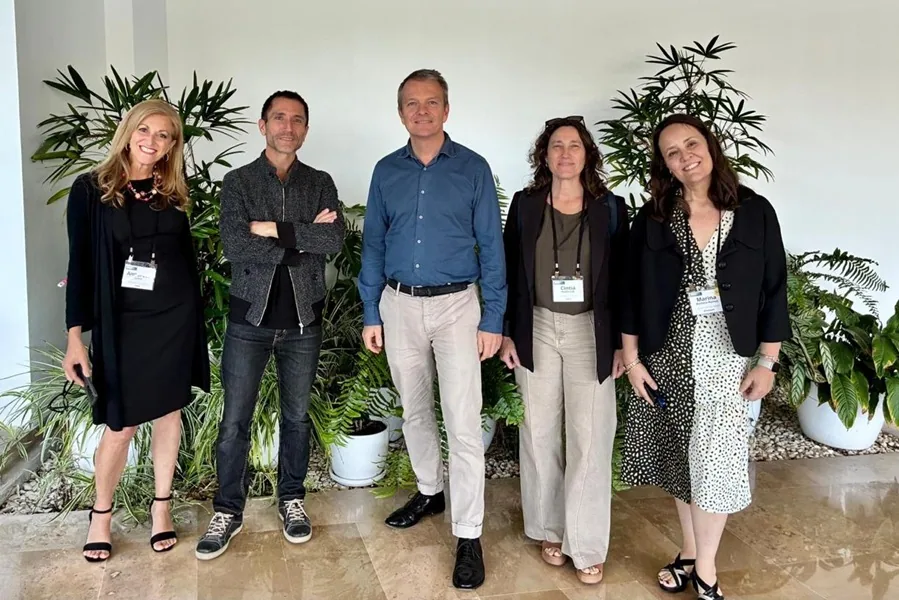
Dr. Pacheco’s talk was part of a symposium entitled “The role of IMMUnity in tackling PARKinson’s disease through a Translational NETwork”, organised by the European consortium IMMUPARKNET, of which he is a member, which studies the basic and clinical aspects of the role of the immune system in the onset and progression of Parkinson’s disease.
Dr. Pacheco’s participation in Dopamine 2026 was part of a scientific programme that brought together specialists from institutions in Europe and the Americas, who presented research on biomarkers, genetics, neuroinflammation and new therapeutic strategies for this neurodegenerative disease.
Original USS article (in Spanish).