
With the formation of a new Board of Directors, composed of leaders from the business, scientific, and biotechnological worlds, the CBT seeks to deepen its role as an articulation platform to drive biotechnological solutions with an impact on productivity, sustainability, and competitiveness.
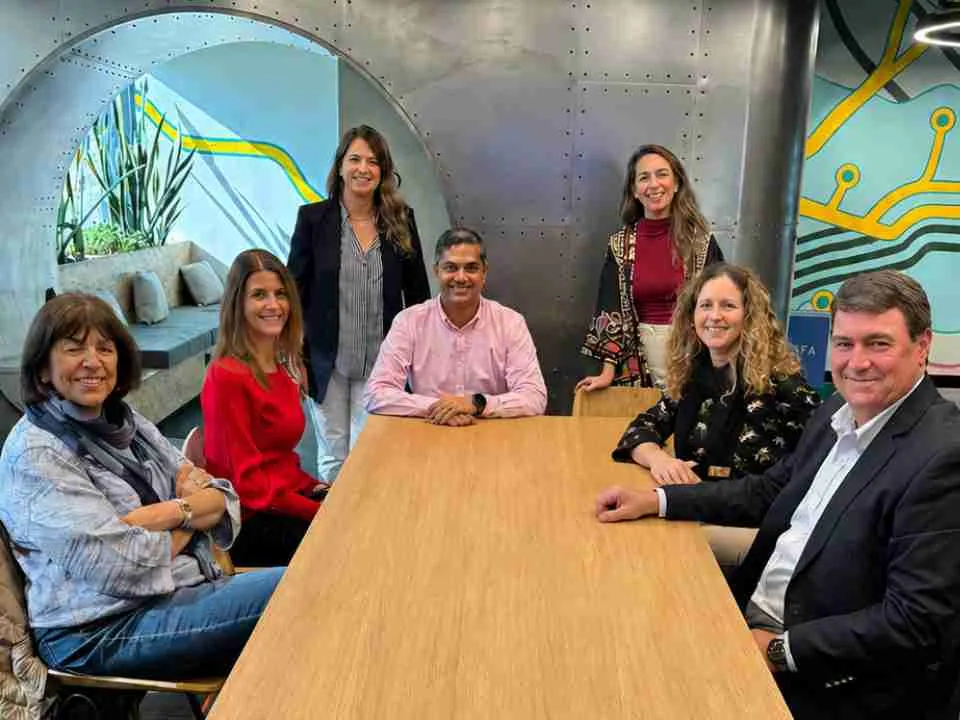
The Center for Translational Biotechnology (CBT) of SOFOFA Hub began a new institutional phase with the formation of a Board of Directors that brings together representatives from the business, scientific, and biotechnological sectors. This body seeks to strengthen the center's ability to coordinate capabilities, link research with industry challenges, and accelerate the validation, piloting, and adoption of biotechnological solutions in real production environments.
The new Board of Directors is composed of Roberto Arrieta, executive president of Empresas Veterquímica; Bernardita Méndez, co-founder and president of the Fundación Ciencia & Vida; Vicente Astorga, president of Farmoquímica del Pacífico; Geraldine Mlynarz, founder of ICTIO Biotechnologies; Manuel Rozas, CSO and founder of Kura Biotech; and Alan García, executive director of SOFOFA Hub.
This renewal reinforces the CBT's purpose of connecting science, technology, and the productive sector, promoting the adoption of biotechnology as an enabling tool to respond to specific challenges in various industrial sectors. In particular, the center seeks to contribute to capacity building, innovation scaling, and the creation of better conditions for biotechnology-based solutions to advance from the laboratory to applications with economic and territorial impact.
“Biotechnology is not a promise for the future, but an enabling technology for productivity today. Our focus is to translate that opportunity into economic impact, connecting scientific capabilities with concrete industry needs and accelerating their validation and adoption in production environments,” said María Paz Merino, executive director of the CBT.
In a context where Chile needs to sophisticate its productive matrix, incorporate innovation, and strengthen public-private collaboration, biotechnology emerges as a strategic opportunity to add value in areas such as agro-industry, aquaculture, food, and the forestry sector. To this end, it is key to coordinate scientific capabilities, infrastructure, investment, technological validation, and knowledge applied to real industry needs.
From this perspective, the CBT seeks to consolidate itself as a neutral platform for connection between science, companies, and the public sector, facilitating collaboration between ecosystem actors and expanding opportunities for biotechnological developments to scale toward sustainable production solutions.
Bernardita Méndez, co-founder and president of Fundación Ciencia & Vida and member of the Board of Directors, highlighted the importance of having spaces that bring technology closer to industry. “All initiatives that today open possibilities for companies interested in developing businesses through technologies are fundamental. The existence of a group like the CBT, in contact with a trade association like SOFOFA, fulfilling this outreach and practical role—showing what can be done and with what tools—is key,” she stated.
With this new phase, the Center for Translational Biotechnology projects an agenda aimed at strengthening the coordination between research, innovation, and productivity, contributing to positioning biotechnology as a concrete tool to address the country's industrial, environmental, and regulatory challenges.
Original text: Portal Innova