

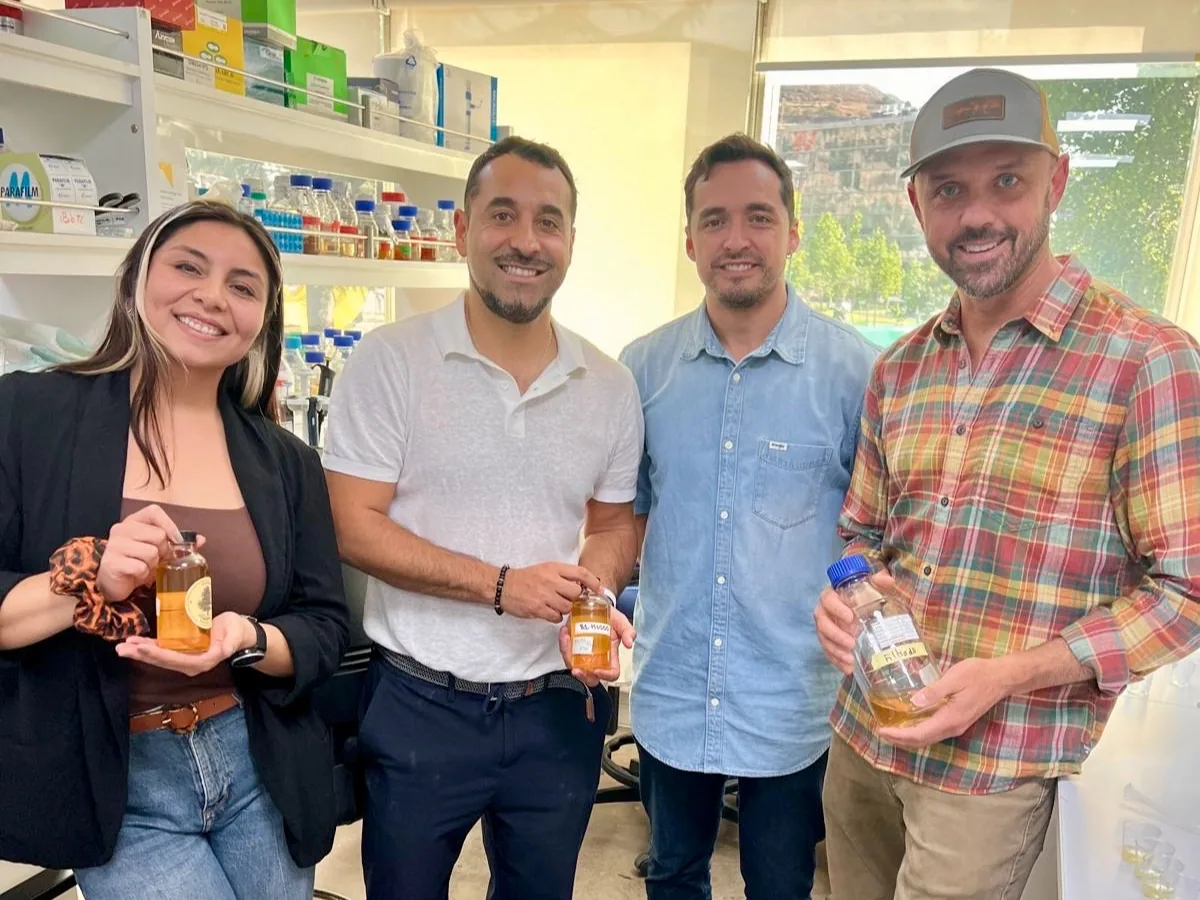
Beer produced with Patagonian yeasts will be served at the Nobel Prize Museum in Stockholm.
The brew, crafted from scientific studies conducted in our country, will arrive in February at the iconic building as part of a collaboration between national researchers, scientists from Stockholm University, and one of that country's leading brands.
The project is based on the use of native Patagonian yeasts and is part of a technology transfer line that already includes links with the United States and the development of a 100% Chilean whisky.
The work is led by Dr. Francisco Cubillos, a new associate researcher at Centro Ciencia & Vida, an entity that will contribute to the scaling and transfer of these developments, which could also reach the U.S. market.
A beer produced with Patagonian yeasts developed from scientific studies in Chile will be consumed starting in February at the Nobel Prize Museum, the iconic building located in Stockholm, Sweden. The product is the result of a collaboration between the team led by Dr. Francisco Cubillos (new associate researcher at Centro Ciencia & Vida), Stockholm University researcher Rike Stelkens, and the Swedish brewery Nils Oscar, one of the largest in that country.
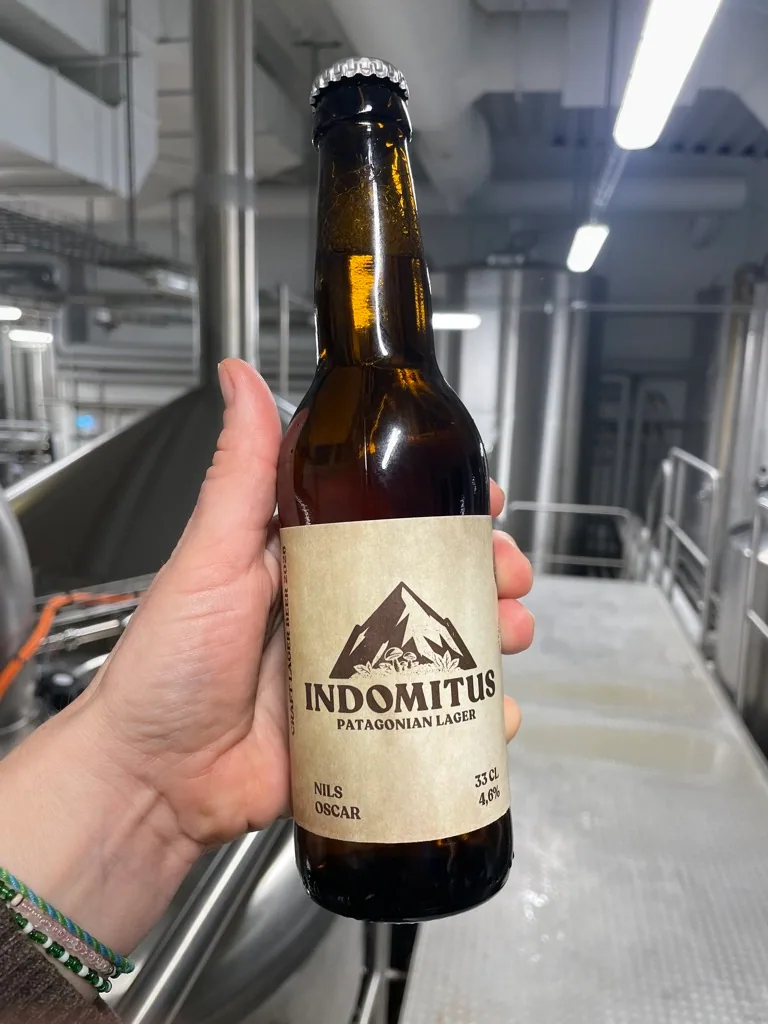
The beer, named Indomitus Lager, is a limited edition brewed with native yeasts from southern Chile, selected and improved in the laboratory based on molecular genetics studies. The project is part of a broader technology transfer strategy aimed at bringing scientific developments from the academic sphere to concrete applications in the food and beverage industry in Chile and abroad.
In parallel with this new international reach, Dr. Cubillos is beginning coordinated work with the business area of Centro Ciencia & Vida, Fundacion Ciencia & Vida, and Universidad San Sebastian (FCV-USS). The goal is to strengthen the scaling of technologies developed from basic science, supporting industrial validation processes, intellectual property protection, corporate networking, and the search for funding.
“We are not looking at an incipient venture, but at work that already has a solid scientific basis and practical validation, even outside of Chile, which makes a significant difference, facilitating its potential scaling and international protection,” says Constanza Sigala, business director of Centro Ciencia & Vida.
The work originates from the study of yeasts inhabiting native forests in the south and Patagonia, particularly those with fermentative capacity. These are isolated from natural environments and then characterized in the laboratory to identify their genetic and metabolic behavior. The focus is on those capable of fermenting different musts—such as those used for beer, whisky, or mead—and their potential to transform sugars into alcohol, carbon dioxide, and compounds associated with aromas and flavors.
Once identified, the yeasts undergo laboratory evaluation and improvement processes that do not involve transgenic modifications. The team works through adaptation to fermentative environments, selection of the best individuals, and controlled crosses, always with genetic DNA traceability. This approach allows for improving their growth capacity, aromatic profile cleanliness, and performance in larger volumes, subsequently evaluating their behavior in scaling processes.
Molecular genetics accompanies every stage, identifying genes associated with desired or undesired aromas and guiding decision-making during biotechnological development.
Chilean science in international showcases
The presence of a beer developed with Chilean science at the Nobel Prize Museum constitutes recognition of the applied research work conducted in recent years regarding fermenting yeasts. The project does not arise from an isolated commercial initiative, but from basic science studies aimed at understanding the genetic diversity of microorganisms present in Patagonian ecosystems.
The link with Sweden is materialized through the Nils Oscar brewery, with which the limited edition Indomitus Lager was developed. The beer will be served starting in February at the Nobel Prize Museum as part of activities associated with the connection between science, industry, and outreach, in a space symbolically linked to the recognition of global scientific knowledge.
“We are releasing a beer called Indomitus Lager with the Nils Oscar brewery in Sweden; it is a limited edition, and this February it will be served at the Nobel Prize Museum as part of this scientific-private connection, which signifies a valuation of the work we are doing and international recognition of scientific work using resources provided by Chile,” explains Francisco Cubillos.
For the researcher, these types of instances allow for showing a different way of relating science and industry, where the focus is not solely on the final product, but on the technological development process that supports it. In this sense, the initiative seeks to highlight the potential of Chilean biodiversity as a basis for value-added innovation.
The Swedish experience adds to other international collaborations. The team is also working with companies in the United States, particularly in California, where tests are being conducted for the production of mead based on southern yeasts, adapted to different production processes and regulatory contexts.
“We are conducting tests with Tineo Mead Company, a mead company in California; these are international collaborations that validate that these yeasts can function outside of Chile and adapt to different processes,” says Cubillos. The goal of these tests is to explore whether these yeasts ferment successfully in different production contexts and validate their use beyond traditional beer and whisky.
The Nobel Prize Museum operates in the old Stockholm Stock Exchange building, located in the city's historic center, and is one of the most symbolic spaces associated with the Nobel Prize. Official announcements of laureates are traditionally made here, and scientific and cultural outreach activities linked to the prizes are held. Its institutional character makes it an international showcase for initiatives connecting research, knowledge, and society beyond the strictly academic sphere.
Yeasts from the end of the world
The use of native yeasts aims to consolidate an alternative to traditional industrial strains. According to the researcher, who is also from the University of Santiago, the global fermented beverage industry mostly uses preparations of European origin, which also exhibit high genetic similarity to each other, limiting the diversity of sensory profiles.
In this market context, the study of Patagonian ferments allows for the introduction of genetic diversity into standardized production processes, generating differences in aroma, flavor, and fermentative behavior. These characteristics can become value attributes for products seeking differentiation in increasingly competitive markets. “All the diversity of Patagonian yeasts is ignored. We want to take that diversity and use it from an applied standpoint,” explains Cubillos.
The work relies on molecular genetics tools that allow for characterizing each yeast at the DNA level. This ensures traceability, reproducibility, and process control, while facilitating continuous improvements through genetic selection without resorting to transgenic modifications. In addition to its application in beer, this line of research extends to distillates. “There is a growing niche for specialized products with high biotechnological innovation value, which is highly valued in international markets and where Chile has a clear opportunity to differentiate itself,” Sigala points out.
Through the startup Nothofagus Spirits, the team also participates in the development of a 100% Chilean whisky, crafted with domestic inputs and laboratory-developed yeasts, with the goal of building a unique territorial identity. “In this company, we are creating a 100% Chilean whisky, with all inputs of national origin, which gives us a territorial identity and a unique recipe that can only be generated in Chile,” says the new scientist from Centro Ciencia & Vida.
Transfer and scaling
The research incorporates technology transfer to the industry from early stages. To this end, the project has infrastructure that allows for scaling processes from the laboratory to volumes close to industrial levels. Among these resources, a pilot plant with fermenters of up to 100 liters stands out, allowing for the evaluation of yeast performance under real production conditions, identifying critical process points, and adjusting variables associated with quality, aroma, and final product stability.
“Centro Ciencia & Vida provided a pilot plant, and that allows us to test how these yeasts behave in industrial scaling, with full DNA traceability and molecular analysis accompanying decision-making,” explains Cubillos. “Our main contribution will be connecting the project with networks, funding, and actors in the entrepreneurial ecosystem, helping scientific initiatives move out of the academic environment and into the market,” adds the Center's business director.
The work model includes technical support for companies adopting these technologies. This support includes fermentation monitoring, contamination control, sensory profile analysis, and yield evaluation, with the goal of reducing production risks and increasing the chances of commercial success, aligning scientific capabilities with scaling and transfer strategies.
This approach addresses one of the challenges of applied science in Chile: ensuring that knowledge generated in universities and research centers effectively translates into products, processes, and services with economic impact and international projection. In this context, his incorporation as an associate researcher at Centro Ciencia & Vida and the coordination with its business area seek to strengthen that bridge between science and the market, the researcher highlights. Original Text: Luis Francisco Sandoval, Agencia S&M Comunicaciones